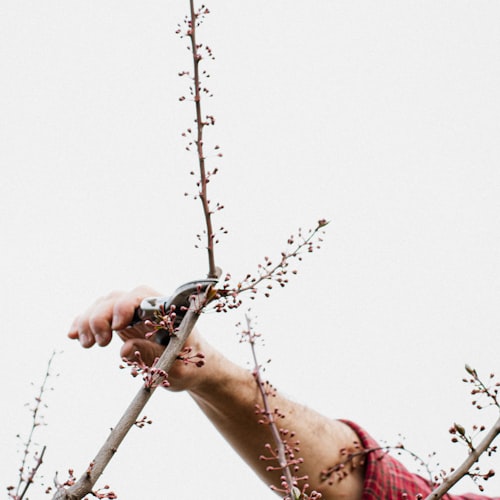
How Do Arborists Assess Whether a Tree Needs to Be Removed?
Professional First-Person Introduction:
After many years working as an arborist across Bendigo and wider Victoria, one of the questions I get asked most often is, “How do you actually decide whether a tree needs to come down?” And honestly, it’s a great question. Most homeowners can spot the obvious signs—like a tree that’s already fallen or one that’s leaning dangerously—but the real assessment requires far more technical knowledge. I’ve inspected thousands of trees over my career, and no two assessments are ever exactly the same. Some trees look healthy on the outside but are completely hollow inside. Others appear damaged after storms but can be saved with pruning. In this article, I want to walk you through the exact process arborists use to determine whether a tree should be removed, the key risk factors we look for, the tools we use, and why professional assessment can prevent expensive damage and keep your property safe.
Table of Contents
- Why Tree Assessment Matters
- Step 1: Visual Inspection
- Structural Defects Arborists Look For
- Root and Soil Assessment
- Canopy and Branch Health
- Identifying Disease, Fungus and Pests
- Assessment of Leaning Trees
- Detecting Internal Decay and Cavities
- Tools and Technology Arborists Use
- Tree Risk Ratings and Standards
- How Location and Environment Affect Risk
- Assessing Storm-Damaged Trees
- Signs a Tree Must Be Removed
- When Removal Is Not Necessary
- Council Rules and Permit Requirements
- Final Thoughts
Why Tree Assessment Matters
Tree assessment is essential for ensuring safety and preventing property damage. A failing tree can cause severe injury, destroy fences, damage roofs, block driveways or even bring down powerlines. Arborists assess trees to:
- Identify current or potential hazards
- Determine whether a tree can be saved
- Recommend pruning instead of removal when possible
- Ensure compliance with council and state laws
- Protect homes, people and surrounding trees
A professional assessment provides clarity and saves homeowners from guessing or making unsafe assumptions.
Step 1: Visual Inspection
The first step in any arborist assessment is a thorough visual inspection. This gives us a baseline understanding of the tree’s overall health and any obvious risks.
During visual inspection, arborists examine:
- The trunk and bark
- The branch structure
- The canopy density
- The root zone
- Wounds, cracks or fungi
- The tree’s lean or balance
- Signs of recent movement or instability
Even a quick look can reveal serious issues such as dead sections, fungal fruiting bodies or cracks that indicate internal decay.
Structural Defects Arborists Look For
Tree structure is one of the biggest predictors of risk. Arborists look for structural defects that weaken the tree and increase the likelihood of failure.
Common structural defects include:
- Cracks and splits in the trunk or major branches
- Co-dominant stems (two main trunks with weak attachment)
- Cavities caused by decay or pests
- Included bark which traps moisture and weakens joints
- Old wounds from previous storms or poor pruning
Some defects, like cracks in large limbs, may require urgent action. Others can be managed through pruning or cabling if the tree still holds structural integrity.
Root and Soil Assessment
A tree’s root system is its foundation. If the roots are compromised, the entire tree may become unstable—even if it looks healthy above ground.
Root issues arborists look for:
- Root rot caused by fungus or overwatering
- Soil heaving indicating the tree is moving
- Compaction from vehicles or construction
- Severed roots from landscaping or plumbing
- Shallow root systems common in some species
Because roots are mostly underground, arborists rely on above-ground clues like mushrooms, soil lifting or leaning to identify issues.
Canopy and Branch Health
The canopy tells a lot about a tree’s health. A thinning canopy or dead branches (known as “dieback”) often indicate internal problems.
Signs of canopy decline include:
- Dead or falling branches
- Sparse foliage
- Brown or yellowing leaves
- Mistletoe infestations
- Epicormic shoots (stress regrowth)
If 30% or more of the canopy is dead, the tree may be beyond recovery.
Identifying Disease, Fungus and Pests
Many tree failures in Victoria are caused by disease or pests. Arborists look for signs such as fungi, borers and bacterial infections.
Common issues include:
- Fungal fruiting bodies (mushrooms on the trunk)
- White rot or brown rot decay
- Borer holes in bark and branches
- Curling or distorted leaves
- Sawdust-like residue from pest activity
Some diseases can spread rapidly, affecting not just one tree but the entire area.
Assessment of Leaning Trees
Not all leaning trees are dangerous. Some species grow naturally at angles, especially those competing for light. However, a sudden or increasing lean is a major warning sign.
A tree lean becomes dangerous when:
- The lean increases over time
- Soil cracking or lifting occurs
- Roots appear exposed or damaged
- The lean is towards a home, road or structure
- The tree has suffered recent storm stress
Arborists use both visual judgement and measurement tools to determine the risk level.
Detecting Internal Decay and Cavities
Some of the most dangerous trees look healthy on the outside but are hollow inside. Decay reduces structural strength dramatically.
Indicators of internal decay include:
- Hollow sounds when tapped
- Fungal growth at the base
- Insect activity
- Cavities or holes in the trunk
- Cracks or bark separation
Advanced tools — like resistance drills or sonic tomography — can reveal the extent of internal damage.
Tools and Technology Arborists Use
Modern arborists use a mix of traditional knowledge and advanced tools to assess trees accurately.
Common tools include:
- Mallets for sounding decay
- Resistographs to measure internal wood density
- Increment borers for core samples
- Sonic tomography for 3D imaging of trunk health
- Binoculars for canopy inspection
- Moisture meters for root-zone analysis
These tools provide detailed information to support removal decisions.
Tree Risk Ratings and Standards
Arborists follow international risk assessment standards when determining whether a tree poses danger.
The most widely used system is:
- TRAQ – Tree Risk Assessment Qualification
TRAQ evaluates:
- The likelihood of tree failure
- The likelihood of a target being hit
- The consequences if failure occurs
This rating helps determine whether removal is necessary, optional or avoidable.
How Location and Environment Affect Risk
A tree’s environment is just as important as its internal health. A perfectly healthy tree may still present risk if located poorly.
Arborists assess:
- The distance to structures
- Pedestrian walkways
- Play areas
- Powerlines
- Driveways and roads
- Exposure to wind
If a tree has a high likelihood of hitting a target, the removal threshold becomes lower.
Assessing Storm-Damaged Trees
Storms can cause immediate or delayed failure. After severe weather, arborists check for:
- Fresh cracks
- Broken limbs
- Uprooting or partial uprooting
- Twisted or split trunks
- Hanging branches
Some trees can recover after storms, but others become dangerous quickly.
Signs a Tree Must Be Removed
After assessment, arborists typically recommend removal when:
- There is major structural failure
- The tree has advanced decay
- Large branches are repeatedly falling
- The tree is leaning dangerously
- Diseases cannot be treated
- The tree is dead or dying
- The roots are severely damaged
- The tree is causing property damage
In these cases, removal is the safest and most responsible action.
When Removal Is Not Necessary
Not every problem means the tree must come down. Many can be addressed with pruning, cabling, mulching and soil improvement.
Removal may not be needed if:
- Issues are minor or superficial
- Only small branches are affected
- The tree is structurally sound overall
- Pests can be treated
- Decay is isolated and not severe
- Risk can be mitigated by selective pruning
Arborists aim to preserve trees whenever safe and practical.
Council Rules and Permit Requirements
Even if an arborist recommends removal, council laws still apply. Some trees in Bendigo require permits due to:
- Vegetation Protection Overlays
- Significant Landscape Overlays
- Heritage Overlays
- Native vegetation rules
A professional arborist can determine whether a permit is needed and provide reports to support your application.
Final Thoughts
Arborists follow detailed, professional processes to determine whether a tree needs removal. From structural assessments and root inspections to risk ratings and environmental considerations, every decision is made carefully and with safety in mind. Understanding how arborists work can give you confidence that the recommendation is based on expert knowledge—not guesswork.
If you’re unsure about the safety or health of a tree on your property, a professional assessment is the best way to protect your home and prevent unexpected hazards.
For expert arborist reports, tree inspections, pruning, stump grinding and safe tree removal in Bendigo, visit Tree Removal Bendigo.